Japanese | English
How Much Wildness Did Settlement Allow?
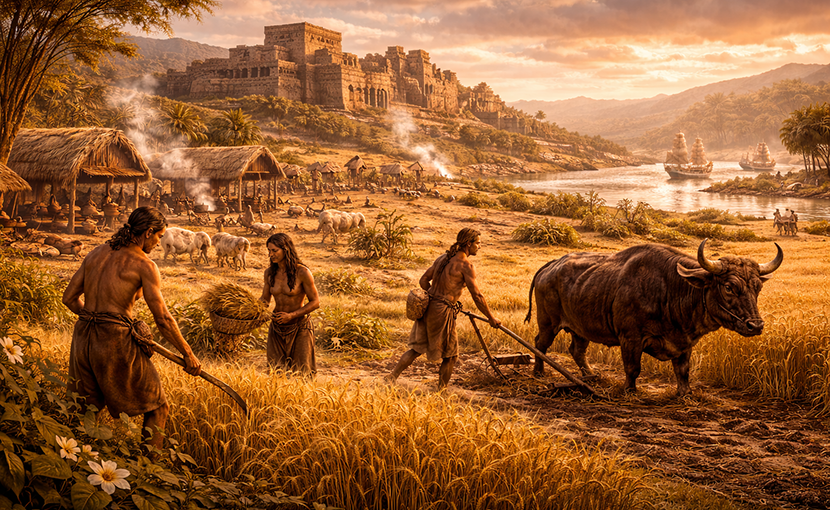
In the Neolithic age,
humanity stopped moving
and began to settle.
It marked the beginning of agriculture,
the prototype of cities,
and the foundation of civilization.
But it also marked something else:
a fundamental shift in humanity’s relationship with wild life.
From Living Within Nature to Managing It
In the Paleolithic age,
humans lived as part of nature.
They hunted,
were constrained by their environment,
and remained embedded within ecosystems.
With settlement, this changed.
Humans began to:
- divide land,
- enclose space,
- regulate movement,
- redesign environments.
For the first time,
nature ceased to be a partner in coexistence
and became an object of control.
Wildness That Was Allowed — and Wildness That Was Not
The species we have examined in the Neolithic to ancient period
are the result of countless acts of selection carried out during this age.
- The aurochs
Only the domesticated lineage was preserved; wildness was erased - Ancestral European bison
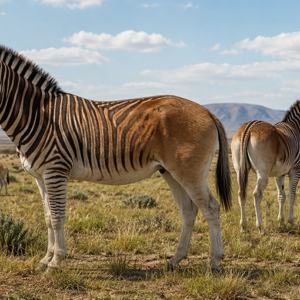
Not domesticated; their living space disappeared - The tarpan
Refused domestication; was eliminated - The Syrian elephant
Too valuable; hunted to exhaustion - The hippopotamus
Too dangerous; expelled from waterways - The lion
Apex predation was no longer tolerated - The crocodile
Incompatible with managed rivers
What unites these cases is simple:
Life and death were decided by social logic,
not ecological necessity.
The Criteria by Which Wildness Was Judged
In settled societies,
the conditions under which wild life was tolerated
became strikingly clear:
- Is it useful?
- Can it be controlled?
- Is it dangerous?
- Is it predictable?
Life that failed these tests
was no longer regarded as “nature,”
but as a problem.
Wildness ceased to be valued for its existence
and was judged solely by its function.
Exclusion Rather Than Extinction
Many of the cases examined in the Neolithic to ancient period
do not represent complete species extinction.
Instead, they involve:
- regional disappearance,
- disconnection from ecosystems,
- the denial of their original ways of living.
This differs fundamentally from the mass extinctions of the Paleolithic.
Extinctions after the Neolithic
were the result of selection and design.
The Moment Humanity Became the Apex
When apex predators vanished,
when rivers were fully regulated,
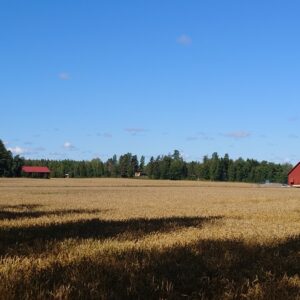
when grasslands became farmland—
a new apex emerged.
Humanity itself.
This was not an ecological inevitability.
It was a choice.
A Pattern That Continues Today
This structure is not a story of the past.
Even today,
- wildness that cannot be controlled is eliminated,
- wildness that can be controlled is utilized,
- and wildness that is too easily controlled is consumed.
The Neolithic to ancient period
reveals the first blueprint of this system.
Settlement did not reject wildness entirely.
But it did not accept it unconditionally.
Only wild life that adapted to human systems
was permitted to remain.
Everything else was:
- erased,
- displaced,
- or reshaped.
How much wildness did settlement allow?
The answer is not confined to the past.
It is still being written.