

Japanese | English
The history of agriculture is also a history of humanity’s attempts to control nature. Among the many technologies developed for this purpose, pesticides and insecticides have played a central role. By protecting crops from insects that damage them, these chemicals have helped stabilize food production and support the expansion of human civilization. Yet behind this technological success lies a fundamental problem that cannot be ignored: as the effectiveness of chemical agents increases, insects evolve resistance to them.
Insects reproduce at an extraordinary speed. Many species complete a generation in a matter of weeks or months. Within these short cycles, individuals that are vulnerable to pesticides are eliminated, while those with natural resistance survive and reproduce. Over time, this process results in populations that are increasingly difficult to control. The more frequently pesticides are used, the more strongly they select for insects capable of surviving them.
By contrast, the development of a new pesticide requires years of research, testing, and significant financial investment. This difference in timescale creates a fundamental imbalance. By the time a new chemical is introduced, insects may already have produced multiple generations, each with new opportunities for adaptation.
This dynamic creates a repeating cycle: new pesticide, resistance, new pesticide, resistance. It resembles an endless evolutionary arms race between human technology and insect adaptation. Yet an important question arises: can humanity sustain this competition indefinitely, or will the limits of technological innovation eventually be reached?
The evolutionary history of insects suggests caution. Insects have existed on Earth for hundreds of millions of years—far longer than human civilization. Throughout that immense span of time, they have survived dramatic environmental shifts, climate changes, and even mass extinction events. Today they remain among the most diverse and successful groups of organisms on the planet. When viewed against such a vast evolutionary background, the assumption that human technology can permanently outpace insect adaptation becomes far less certain.
Another concern lies beneath the surface of the soil. Soil is not simply an inert medium in which plants grow; it is a complex living system filled with microorganisms and small organisms that decompose organic matter and recycle nutrients. These microscopic communities sustain the fertility and vitality of agricultural land. If pesticides disrupt these organisms on a large scale, the soil itself may gradually lose its ability to support healthy plant growth. In such a scenario, a tool designed to protect agriculture could ultimately weaken its very foundation.
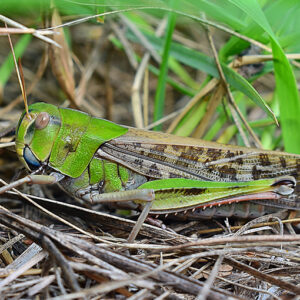
It is also worth considering the position of insects within this conflict. Insects are not acting with hostility toward humanity. They do not consciously oppose human agriculture. They simply live according to the fundamental principles of life: feeding, reproducing, and adapting to their environment. When insects consume crops, they are not committing an offense; they are merely surviving.
Humans, however, define these organisms as “pests” when their behavior conflicts with human interests. This classification reflects a human-centered perspective rather than an objective property of nature. By attempting to eliminate these insects through chemical control, humans impose powerful evolutionary pressure on them. The individuals that survive become the founders of stronger, more resistant populations. In this sense, humanity unintentionally participates in the evolutionary strengthening of the very insects it seeks to eliminate.
Seen from a broader perspective, insects are not deliberately opposing humanity. Rather, humans have chosen to wage a battle against organisms that are simply part of the natural world. For millions of years, ecosystems maintained balance through complex interactions among species. Yet human intervention has accelerated and intensified these interactions within an extremely short period of time.
This does not mean that pesticides have no place in agriculture. On the contrary, they have contributed enormously to global food production. But relying solely on chemical control raises serious questions about long-term sustainability. If insects continue to adapt faster than new pesticides can be developed, the strategy itself may eventually reach its limits.
Insects are simply living. They adapt, reproduce, and continue their lineage, just as life has done for hundreds of millions of years. Humans, meanwhile, attempt to remove those organisms that interfere with their needs. The conflict between the two is therefore not merely a technical problem of pest control; it is also a philosophical question about humanity’s relationship with nature.
Can humans truly dominate the natural world, or must they learn to coexist with it more carefully? The quiet persistence of insects, evolving generation after generation, continues to pose that question to us.





コメント