Japanese | English
– An Extinction of the Paleolithic Age –
An Extinction of the Paleolithic Age –
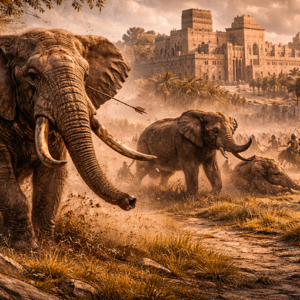
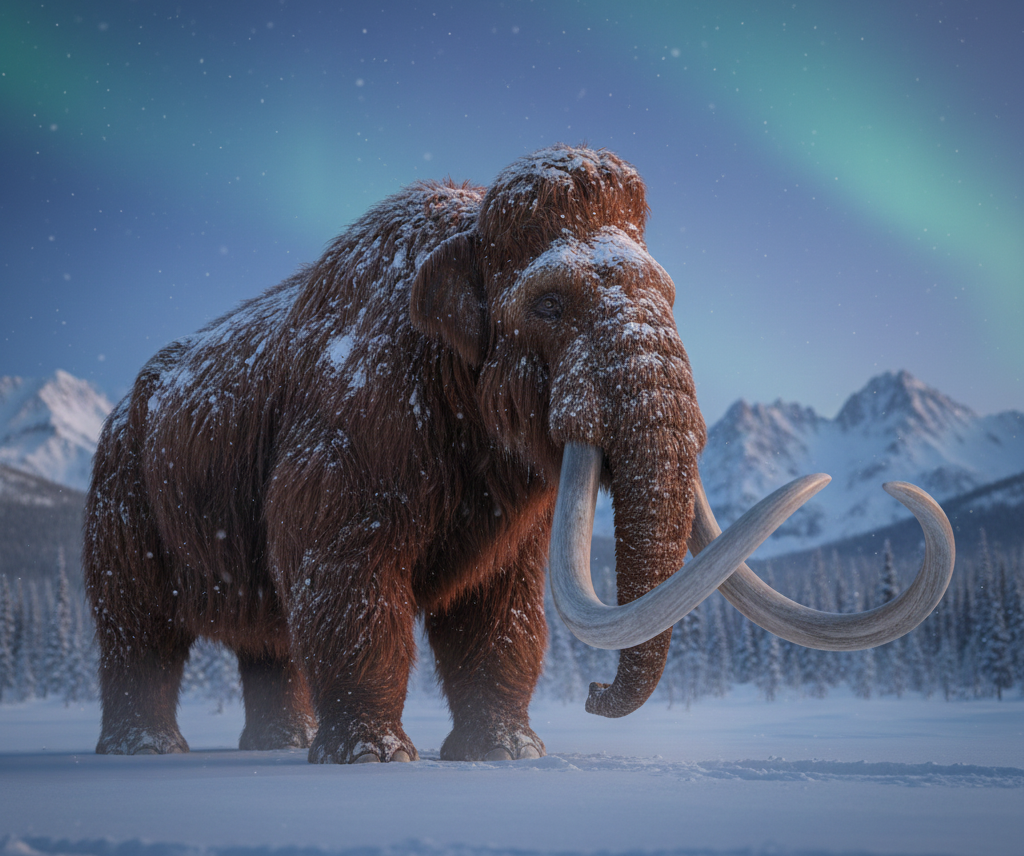
The Mammoth(Mammuthus spp.)
A Symbol of Human-Driven Extinction
Few animals embody human-driven extinction as powerfully as the mammoth.
For hundreds of thousands of years, mammoths dominated the frozen landscapes of the Ice Age, surviving repeated climatic shifts. Yet they failed to survive one encounter—their contact with Homo sapiens.
Basic Information
| Geographic range | Northern Eurasia and North America |
|---|---|
| Time range | ~400,000 years ago to ~4,000 years ago |
| Height | Approximately 3–4 meters at the shoulder |
| Diet | Herbivorous |
The Path to Extinction
Mammoths persisted until the very end of the last Ice Age.
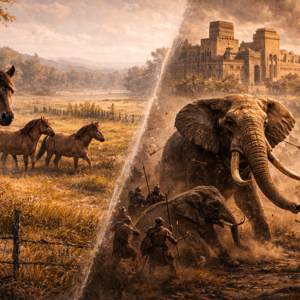
However, the timing of their disappearance aligns strikingly with the spread of modern humans across the continents.
Archaeological evidence tells a consistent story:
stone-tool cut marks on bones,
clear signs of coordinated group hunting,
and rapid population collapse within mere centuries to a few millennia after human arrival in certain regions.
Climate change alone cannot explain this pattern.
Why Humans Were Decisive
Why Humans Were Decisive
Mammoths reproduced slowly, giving birth to a single calf after long gestation periods.
Such a life strategy made them exceptionally vulnerable—even limited hunting pressure could destabilize entire populations.
Moreover, humans were not ordinary predators. They hunted with:
- tools and weapons,
- cooperation and communication,
- foresight and planning.
From the perspective of Ice Age ecosystems, humanity represented a novel and unprecedented kind of predator.
What the Mammoth’s Extinction Tells Us
The mammoth was not weak.
It was well adapted.
It had survived drastic environmental change before.
What it could not survive was the sudden appearance of a species capable of reshaping entire ecosystems.
The extinction of the mammoth marks the moment humanity first confronted an unsettling truth:
we are a force capable of erasing life from the Earth.
Extinction-related book