

Japanese | English
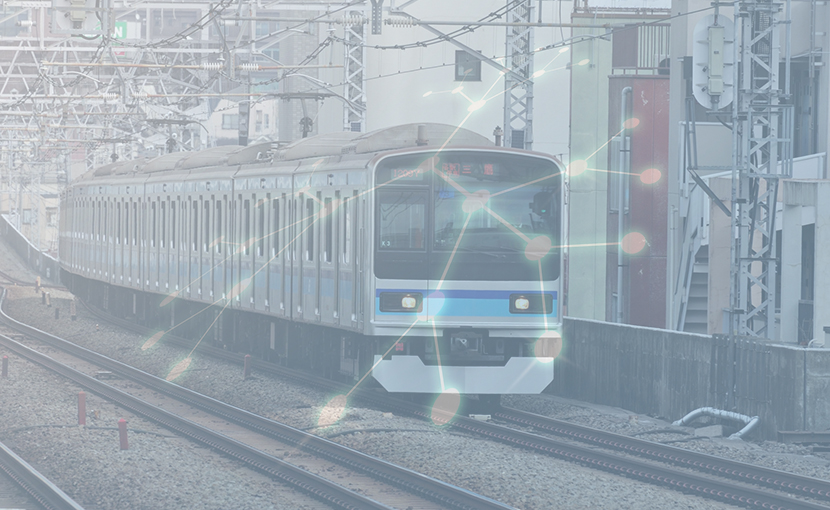
Crowded commuter trains have become an accepted feature of modern urban life. Yet they are not a natural phenomenon. They are the result of deliberate choices—urban planning, labor practices, transportation policy, and a culture that glorifies endurance while ignoring human limits. What we call “rush hour” is, in reality, a manufactured abnormal environment.
A space in which people are packed so tightly that movement is impossible, bodies are forced into contact, and escape is denied would normally be treated as an emergency. On commuter trains, however, this condition is reproduced every day, by design. In such an environment, contact transmission is not an accident but a structural certainty. Straps, handrails, doors, and seats become relay points for bacteria and viruses, passed from hand to hand without interruption.
At the same time, the risk of airborne transmission is systematically ignored. Enclosed cars with limited ventilation turn shared breathing into a biological gamble. A single cough or sneeze can disperse pathogens throughout the car in seconds. Yet society responds not by questioning the environment itself, but by shifting responsibility onto individuals: “Wear a mask,” “Be careful,” “Take precautions.”
This logic is fundamentally dishonest. No amount of individual caution can neutralize an environment designed to defeat it. People cannot stop breathing. They cannot refuse physical contact when there is no space to stand. In crowded trains, infection is not a matter of personal behavior—it is the outcome of structural design.
Why, then, does this system persist? The answer is simple. It is efficient for corporations, inexpensive for governments, and convenient for a society that prefers not to change. The cost is externalized onto commuters, who are expected to absorb health risks, fatigue, and exposure to bacteria and viruses as a matter of personal responsibility.
The most dangerous aspect of crowded trains is not merely the risk of infection, but the normalization of the abnormal. Discomfort, anxiety, and physical vulnerability have been rebranded as routine. What should provoke outrage is instead treated as inevitability. In this sense, crowded trains are not just a transportation issue—they are a microcosm of a society that prioritizes efficiency over human well-being.
Crowded trains are not unavoidable. They have simply been allowed to persist. Until society is willing to acknowledge this environment as abnormal and assume responsibility at a structural level, this engineered infection space will continue to reproduce itself—every morning, every evening, without question.








コメント