

Japanese | English
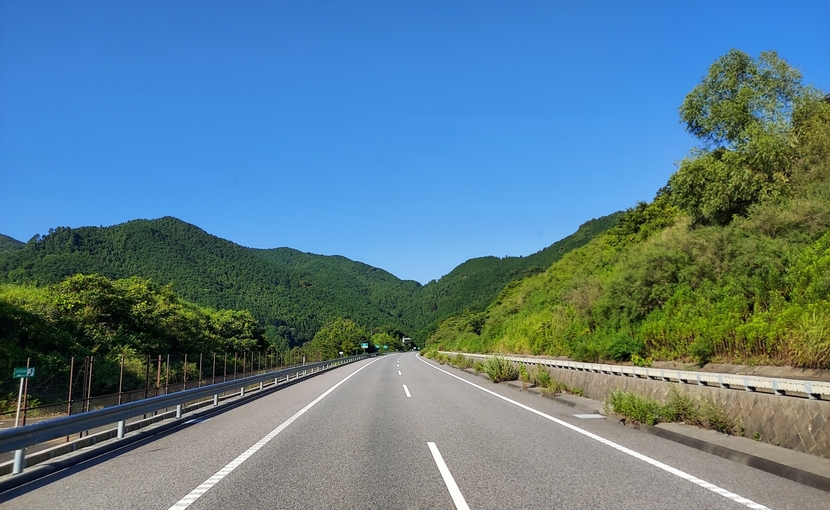
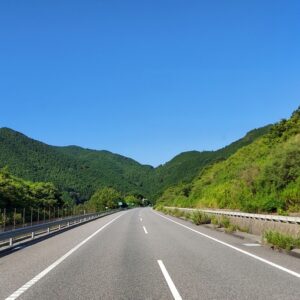
Land that was once continuous has quietly been severed by roads.
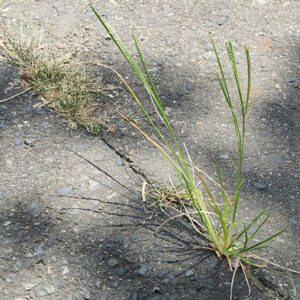
For humans, asphalt is merely a line of convenience.
For many other living beings, it is a border that demands a choice:
to cross, to abandon, or to die.
Creatures whose habitats have been divided still attempt to cross it.
On the other side are food, mates, and the conditions for survival.
Yet these crossings often end as traffic deaths.
Bodies flattened beneath tires are never counted,
never recorded as accidents,
and never assigned responsibility.
In summer, exhausted cicadas lie on the asphalt.
After spending years underground,
they emerge, sing, reproduce, and should return to the soil.
But the final step of their life cycle is taken from them.
On heat-retaining pavement, wings folded and legs outstretched,
they appear not simply dead, but unable to go back.
Death, by nature, is an entrance into circulation.
A body is broken down by microorganisms,
returned to the soil,
and transformed into nourishment for new life.
Yet on asphalt, this chain of decomposition never begins.
Water does not penetrate, bacteria cannot settle,
and death dries, fragments, and disappears
without ever joining the cycle.
Cities are not designed around ecological continuity.
They prioritize human mobility and efficiency.
As a result, dead bodies are treated not as part of nature
but as contaminants.
They are cleaned away, removed, erased.
There is no mourning, and no return.
Creatures that cannot return to the soil
are reflections of the fractures embedded in urban environments.
In places where life and death are no longer connected,
existence appears and vanishes in isolation.
We walk and drive over these surfaces,
rarely noticing the traces left beneath our feet.
Still, when we see a small shadow attempting to cross a road,
we can pause—if only for a moment.
We may not change the world,
but we can choose not to look away.
So that lives unable to return to the soil
are not rendered entirely silent.


コメント