

Japanese | English
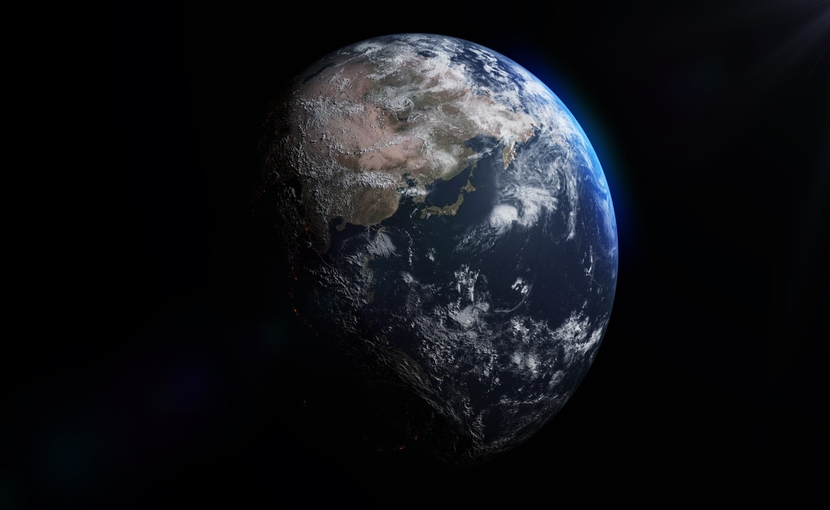
Humanity needs the Earth. The Earth does not need humanity.
To avoid confronting this elementary truth, humanity manufactures beautiful phrases with tireless enthusiasm:
“Protect the planet,” “a sustainable future,” “harmony with nature.”
They sound virtuous, but in reality they are little more than slogans—ornaments for self-deception.
What, after all, does it mean to say “protect the Earth”?
Who is speaking, and from what position of authority?
This planet has survived for 4.6 billion years—enduring asteroid impacts, supervolcanoes, and global glaciations.
To suggest that such a world now depends on the goodwill of a primate species with a history of mere hundreds of thousands of years is, frankly, absurd.
What humanity seeks to protect is not the Earth itself.
It is a version of the Earth that remains habitable to us.
More precisely, it is the continuation of a lifestyle we have grown accustomed to.
By rebranding this self-interest as “love for the planet” or “environmental consciousness,” we ensure that the discussion remains fundamentally distorted.
The Earth will persist without humanity.
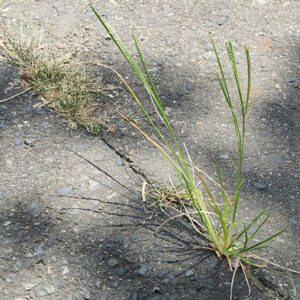
Whether carbon dioxide levels skyrocket, oceans acidify, or ecosystems collapse, the planet will simply undergo another phase transition and move on.
The Earth will not suffer.
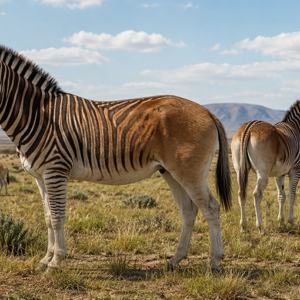
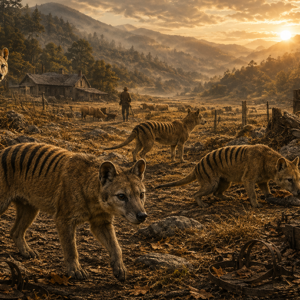
Those who will suffer are the organisms unable to adapt—and humanity will merely be among them.
Yet humanity persists in imagining itself as the planet’s custodian.
We speak of stopping climate change,
protecting nature,
restoring ecosystems.
Each phrase drips with arrogance.
At best, we are capable of marginally slowing the rate of destruction and postponing our own collapse.
To call this “saving the Earth” is akin to rearranging furniture inside a house that is already falling apart.
More insidious still is the way the phrase “protect the Earth” functions as a moral amnesty.
It allows humanity to avoid the real questions.
The questions that should be asked are these:
Does humanity deserve to exist at its current scale?
Can a civilization built on perpetual growth ever be sustainable?
These are uncomfortable questions, and so they are carefully sidestepped.
Instead, the Earth is anthropomorphized, cast as a victim, while humanity conveniently assumes the role of protector.
This inversion of reality is the true source of our calamity.
The Earth remains silent.
But this silence is not weakness.
It is indifference—indifference born of overwhelming permanence.
The Earth will continue after humanity is gone.
New life may emerge, or the planet may settle into a quiet, barren state.
Either outcome is equally inconsequential to the Earth itself.
The real problem is humanity’s inability to accept this.
Our inability to imagine a world in which we are not the protagonist.
Our refusal to endure the possibility that we are unnecessary.
And so humanity continues to declare, with solemn urgency,
“We must protect the Earth.”
No.
What demands protection is the fragile civilization humanity has constructed atop its own illusions.
Whether that civilization survives or collapses is, ultimately, none of the Earth’s concern.


コメント